
Ageing populations are placing significant strain on healthcare systems worldwide, and the UK is no exception. The NHS continues to face a substantial shortfall in nursing staff, with research from the Royal College of Nursing indicating that many nurses believe staffing levels are at times dangerously low across facilities. At the same time, the NHS Long Term Workforce Plan is driving major changes in what recruiters are looking for — making this an important moment to ensure your CV reflects not just where you have been, but where nursing is heading.
Whether you are breaking into nursing for the first time or advancing your career within the NHS or private sector, a strong CV is your most important first step. The following tips will help you build a document that stands apart.
The Core Principles of a Nursing CV
-
Lead with a strong personal profile Recruiters will skim most of your CV looking for relevant keywords, but at the top they are more likely to read carefully. Use your personal profile to provide a clear narrative of your experience, training, and credentials - and make explicit why you are an ideal candidate for this specific role. Keep it focused and avoid generic statements that could apply to any applicant.
-
Include a dedicated expertise section Nursing is highly specialised, and NHS and private sector recruiters are scanning for specific competencies. Use clear bullet points to list your areas of clinical expertise — such as paediatrics, obstetrics, oncology, or emergency care (alongside practical skills including medication administration, case management, and regulatory compliance). Tailor this section to the role you are applying for.
-
Highlight additional credentials and licences prominently As nurses advance, many obtain additional qualifications that open doors to highly specialised roles. These should be clearly visible — not buried in a long list. Recruiters actively scan for specific credentials, and making them easy to find can be the difference between progressing and being overlooked.
-
Showcase achievements and leadership If you have served on a board or committee, trained new employees, helped launch new services, or driven improvements to standards at a previous facility, highlight these explicitly. These achievements demonstrate both the drive to succeed and the ability to see meaningful change through to completion — qualities that ward managers and NHS Trusts actively seek.
What NHS Recruiters Are Looking for in 2025-26
The NHS Long Term Workforce Plan has shifted recruitment priorities significantly. In addition to clinical skill, employers are now placing particular emphasis on digital capability, values alignment, and integrated working. Understanding these priorities (and reflecting them in your CV) will set you apart from candidates relying on an outdated template.
Values-Based Recruitment
UK healthcare recruiters are increasingly assessing not just what you can do, but how you do it. The NHS Constitution sets out six core values: working together for patients, respect and dignity, commitment to quality of care, compassion, improving lives, and everyone counts. Where you can, map your achievements to these values explicitly — in your personal profile and your expertise section. Showing that your professional ethos aligns with the organisation's mission makes a measurable difference in a values-led selection process.
Digital Literacy and EPR Proficiency
Most NHS Trusts have now transitioned to Electronic Patient Records systems such as Epic or Cerner. Don't simply state that you use computers: specify your experience with telehealth platforms, digital observations such as NEWS2 on handheld devices, and EPR data management. Demonstrating that you can hit the ground running in a modern, paperless environment is a significant differentiator.
MDT and Integrated Care Collaboration
The 2025-26 workforce strategy places a strong emphasis on integrated care — nurses working more closely than ever with social workers, pharmacists, and community care teams. Provide concrete examples in your work history of complex patient discharges or care plans that involved multiple agencies. Showing you understand the wider integrated care system (ICS) marks you as a forward-thinking candidate.
Mentorship and Practice Supervision
With the ongoing drive to train and retain domestic nurses, experience as a Practice Supervisor or Assessor is in high demand. Even informal mentoring of students or newly qualified nurses (NQNs) is worth noting — ward managers dealing with high turnover actively look for candidates who contribute to a supportive learning environment and help retain staff.
CPD and NMC Revalidation
Rather than simply stating that you are NMC-registered, briefly demonstrate how you have met your revalidation requirements. List recent continuing professional development — ALS updates, mental health first aid, cultural competency training, or any bitesize learning. This signals to recruiters that you are a committed lifelong learner who stays current with evolving UK clinical standards.
A strong nursing CV balances clinical credibility, specific achievements, and clear alignment with the values and priorities of the organisation you are targeting. Treat your CV with the same attention to detail you bring to patient care — and tailor it to every role you apply for.
Need a professionally written nursing CV?
Our expert writers understand what NHS and private healthcare recruiters look for — and how to present your clinical experience in the most compelling way.
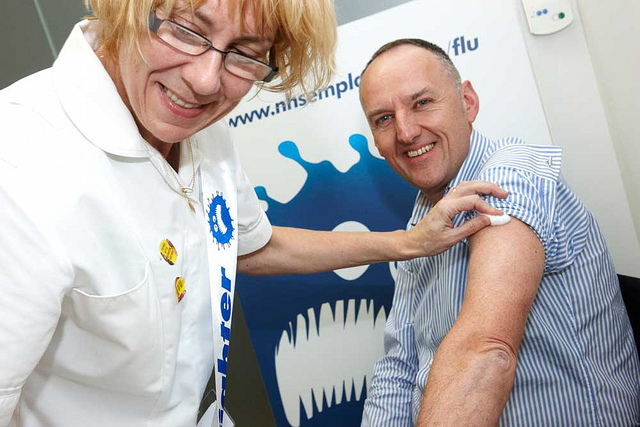
Photo: Nurse injects staff member against flu — NHS Employers.